


Telomere length is an indicator of the extent to which we are aging biologically. Telomere shortening occurs naturally as we get older. Shortened telomeres are associated with increased cardiovascular disease risk and with reduced lifespan. Researcher Trine Baur Opstad points out that, in addition to genetics, environmental exposures and lifestyle choices influence telomere attrition rates [Opstad 2025].
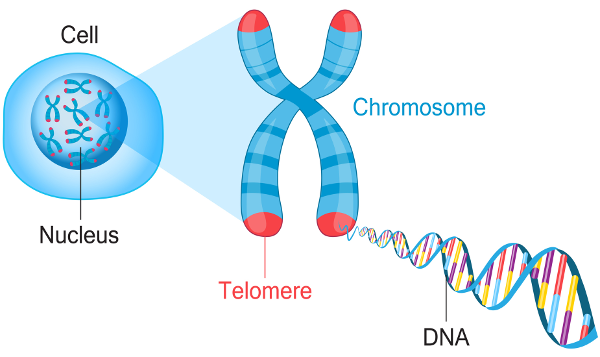
The cell nucleus contains our DNA. The DNA is organized in chromosomes. Telomeres at the ends of chromosomes preserve DNA during cell division.
Opstad describes telomeres as protective nucleotide caps at the ends of our chromosomes. She compares telomeres to the plastic tips on shoelaces. The purpose of the telomeres is to keep the ends of the chromosomes from fraying or fusing together or otherwise being degraded [Opstad 2025].
Opstad explains that a small bit of telomere DNA is lost when a cell divides. The telomere shortening that occurs every time cells divide eventually results in critically short telomeres. This telomere loss, in turn, leads to cell senescence or cell death through apoptosis (a process for removing damaged cells). The aging-related telomere shortening is associated with the development of cardiovascular disease, some cancers, and some neurological disorders [Opstad 2025].
Measuring Telomere Length in Leukocytes
It is easiest to measure telomere length in isolated DNA that has been retrieved from leukocytes in the blood circulation. Retrieval from solid tissue biopsies is more difficult. Fortunately, leukocyte telomere length can be used as a surrogate for telomere length in other tissues. However, the extent to which leukocyte telomere length corresponds to telomere length in various tissues and organs does vary. Generally, telomeres in the colon, the skeletal muscle, and the testes tend to be longer than telomeres in leukocytes. We need more research on the relationship of leukocyte telomere length to telomere length in cells elsewhere in the body [Opstad 2025].
Telomeres and Cardiovascular Disease Risk
Individuals with shorter leukocyte telomere length at mid-life tend to have a shorter life expectancy than individuals with longer telomere length at mid-life. One reason is that shorter telomere length has been associated with an increased risk of cardiovascular disease, e.g., increased risk of atherosclerosis and coronary artery disease. It is not clear whether the shortening of the telomeres directly influences the progression of cardiovascular disease or is just a biomarker of disease risk [Opstad 2025].
Analysis of the data from the UK Biobank, i.e., data from more than 400,000 study participants, has shown that shorter leukocyte telomere length is associated with shorter longevity by up to 2.5 years. Shorter telomere length is also associated with a higher incidence of sudden cardiac death, adverse coronary events, and hospitalization because of heart failure [Opstad 2025].
Coenzyme Q10 Supplementation and Telomeres
In the randomized controlled KiSel-10 trial, Prof. Urban Alehagen and a team of researchers enrolled elderly, community living Swedish citizens who were low in selenium at the start of the study. The study outcomes showed that combined daily supplementation with 200 mg of ubiquinone Coenzyme Q10 and 200 mcg of selenium-enriched yeast for four years preserved the length of leukocyte telomeres [Alehagen 2013, Alehagen 2018].
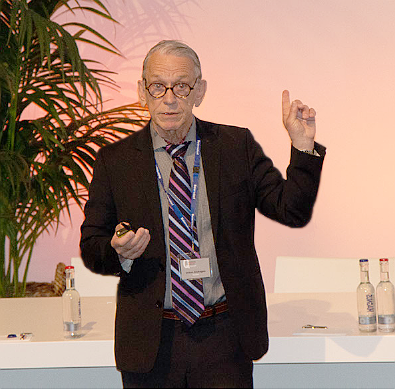
In the KiSel-10 clinical study, Prof Urban Alehagen showed that combined CoQ10 and selenium supplementation of elderly citizens low in selenium improved cardiovascular health.
Analysis of the data from the KiSel-10 study has documented the following statistically significant beneficial outcomes of the combined CoQ10 and selenium supplementation [Opstad 2022]:
- reduced cardiovascular mortality
- reduced levels of inflammation biomarkers
- reduced levels of oxidative stress biomarkers
- less leukocyte telomere attrition
- increased levels of circulating Sirtuin1 proteins (which have a key role in cellular energy metabolism)
Conclusion: Coenzyme Q10 and Telomere Length
Telomere attrition is a part of biological aging.
Shortened telomeres are associated with increased risk of cardiovascular disease and reduced life expectancy.
Living an anti-inflammatory lifestyle, e.g., eating a balanced diet, exercising regularly, reducing stress, and getting adequate sleep, are factors in preserving telomere length.
In the Swedish KiSel-10 study, daily supplementation with CoQ10 and selenium was associated with preservation of telomere length and with reduced cardiovascular mortality.
Sources
Alehagen U et al. Cardiovascular mortality and N-terminal-proBNP reduced after combined selenium and coenzyme Q10 supplementation: a 5-year prospective randomized double-blind placebo-controlled trial among elderly Swedish citizens. Int J Cardiol. 2013 Sep 1;167(5):1860-6.
Alehagen U et al. Still reduced cardiovascular mortality 12 years after supplementation with selenium and coenzyme Q10 for four years: A validation of previous 10-year follow-up results of a prospective randomized double-blind placebo-controlled trial in elderly. PLoS One. 2018 Apr 11;13(4):e0193120.
Opstad TB et al. Selenium and Coenzyme Q10 intervention prevents
telomere attrition, with association to reduced cardiovascular mortality sub-study of a randomized clinical trial. Nutrients. 2022;14:3346.
Opstad TB. Telomere length – a marker of aging in humans, with focus on cardiovascular aging and disease. Klinisk Biokemi i Norden. 2025;37(4):14-18.
The information presented in this review article is not intended as medical advice. It should not be used as such.








Leave A Comment