

What are the characteristics of CoQ10 in human blood?
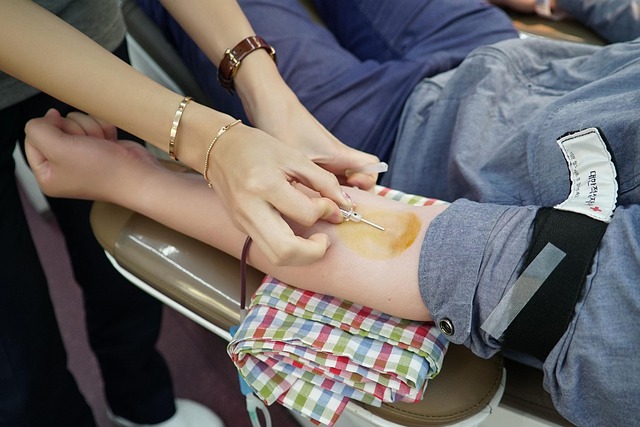
Men typically have 5 to 6 liters of blood. Women are usually smaller and have less muscle mass. They typically have 4 to 5 liters of blood. In normal healthy adults, the blood CoQ10 concentration is typically about 1 milligram per liter of blood. For therapeutic purposes, supplements need to increase the concentration to 2.5 mg/L or higher.
CoQ10 is present in human blood within a normal range of approximately 0.433 – 1.532 mg/L [Mayo Clinic 2026].
CoQ10 is one of the most hydrophobic naturally occurring biological substances. It does not exist in a free state in blood. It is essentially insoluble in the aqueous medium of blood plasma. Therefore, lipoprotein carriers transport CoQ10 in the blood. Primarily, it is LDL-cholesterol (approx 58% of total) that carries the CoQ10 to and from the liver and to the tissues. HDL-cholesterol (approx 26%) and VLDL-cholesterol (approx 16%) carry the remainder of the CoQ10 [Tomasetti 1999].
How CoQ10 Distributed in the Blood?
Under normal circumstances, approx 90-95% of CoQ10 carried in blood plasma is in the reduced form of ubiquinol [Bhagavan & Chopra 2006]. White blood cells and platelets also contain CoQ10; platelets contain a very high concentration of CoQ10 relative to their size, reported in the range 164–190 pmol/10⁹ cells. While white blood cells contain significant concentrations of CoQ10 per cell (of the order of 37 – 133 pmol/mg protein), they constitute a very small percentage of the total CoQ10 pool in the blood. Red blood cells contain relatively low levels of CoQ10 (14-70 pmol/10⁹ cells). Unlike other cells, red blood cells lack mitochondria. Consequently, CoQ10 in blood cells is primarily involved in managing oxidative stress rather than cellular energy production [Niklowitz 2007].
Where does CoQ10 in blood originate?
The major site of CoQ10 synthesis within the body, based on tissue weight, is the liver. Accordingly CoQ10 enters the blood circulation via the hepatic vein. The liver is also responsible for processing CoQ10 for removal from the circulation. The principal route for eliminating CoQ10 is through the liver’s biliary tract. CoQ10 in bile passes into the digestive tract. There, it is eliminated in faeces [Bentinger 2010].
A relatively small amount of CoQ10 in blood comes from the normal diet (estimated as approximately 3 – 6 mg/day) [Bhagavan 2006]. Following intestinal absorption, CoQ10 transits via the lymphatic system and the blood circulation to the liver. There, the CoQ10 is incorporated into lipoprotein particles and released back into the bloodstream. A more significant source of CoQ10 in blood is the use of dietary supplements. As an example, a daily CoQ10 dose of 200mg can raise baseline blood levels to more than 3 mcg/mL. But, this is highly dependent on the supplement formulation and bioavailability [Langsjoen 2013].
Does the form of CoQ10 supplement (ubiquinone or ubiquinol) influence blood levels?
The answer to this question is no. It does not matter whether the CoQ10 supplement is taken in ubiquinone or ubiquinol form. The outcome is the same. This is because supplementary ubiquinol is oxidized to ubiquinone during its transit through the digestive system. Both supplementary forms arrive in the small intestine as ubiquinone. The intestinal enterocytes absorb the CoQ10 in the form of ubiquinone. Next, the ubiquinone passes into the lymph in lipoprotein particulate form. It is during this process in the lymph that the ubiquinone converts to ubiquinol. From the lymph, the CoQ10 then enters the blood via the thoracic duct and subclavian vein [Judy 2022].
What is the function of CoQ10 in blood?
As noted above, the main site of CoQ10 synthesis (on a tissue size basis) is the liver. This does not mean (as for some metabolites) that the liver is responsible for providing Q10 to other tissues. In fact, every tissue (with the exception of red cells) can synthesize its own CoQ10 [Littarru 2010].
Possibly, the CoQ10 in the blood has very little to do with the cellular metabolism of CoQ10 in the tissues. The main function of CoQ10 in blood may be to protect blood lipids from oxidation. However, there must be some circumstances (e.g., heart failure, aging) when CoQ10 can access the cells in body tissues from the blood. Otherwise, the Q-SYMBIO study and the KiSel-10 study would not have had such successful outcomes with regard to effects on heart failure or mortality risk respectively [Mortensen 2014; Alehagen 2018].
What is the significance of altered CoQ10 redox status in blood?
An altered CoQ10 redox status in blood — defined as a shift in the ratio between the reduced ubiquinol form and oxidized ubiquinone form (deceased ubiquinol and increased ubiquinone) — is an indicator of increased systemic oxidative stress. Notably, the lower ubiquinol-to-ubiquinone ratio in the blood occurs in a number of disorders including cardiovascular and neurodegenerative disorders as well as aging [Wada 2007].
Such altered redox status is indicative of lower resistance of LDL to oxidation, with a subsequent increased risk of atherosclerosis. Altered redox status also occurs in patients taking statin drugs (which block both cholesterol and CoQ10 synthesis). Inevitably, taking statin medications leads to potential secondary CoQ10 deficiency. High-intensity statin therapy (e.g. 40 mg atorvastatin) can result in a reduction in blood CoQ10 levels of up to 50% [Laaksonen 1995].
Conclusion: CoQ10 redox status in the blood circulation
In older adults (60-82 years), the blood CoQ10 concentration decreases. Furthermore, a shift in CoQ10 redox status favoring the oxidized form often accompanies this decrease in total CoQ10 content in the blood. Often, these changes in the CoQ10 in the blood reveal themselves in elderly individuals who are more susceptible to oxidative stress [Mancini 2015]. Thus, an altered CoQ10 redox state (higher oxidized proportion) correlates independently with a higher risk of all-cause mortality in the general population [Stürmer 2025].
It should be noted that the aging-related changes in blood CoQ10 redox status (increased ubiquinone/ubiquinol ratio) linked to mortality risk reflect metabolic dysfunction. The changes in CoQ10 redox status have no connection with whether individuals have taken CoQ10 supplements in the ubiquinone or the ubiquinol form.
Sources
Alehagen U et al. Still reduced cardiovascular mortality 12 years after supplementation with selenium and coenzyme Q10 for four years: a follow-up of a randomized clinical trial in elderly citizens. PLoS One. 2018;13(4):e0193121
Bentinger M, Tekle M, Dallner G. Coenzyme Q–biosynthesis and functions. Biochem Biophys Res Commun. 2010 May 21;396(1):74-9.
Bhagavan HN, Chopra RK. Coenzyme Q10: absorption, tissue uptake, metabolism, and pharmacokinetics. Free Radic Res. 2006;40(5):445-453.
Judy WV. The single-dose absorption of different coenzyme Q10 product types into the lymph compared to that transported to the blood. Integr Med (Encinitas). 2022;21(5):30-35.
Langsjoen PH, Langsjoen AM. Comparison study of plasma coenzyme Q10 levels in healthy subjects supplemented with ubiquinol versus ubiquinone. Clin Pharmacol Drug Dev. 2013;3(1):13-17.
Laaksonen R et al. Decreases in serum ubiquinone concentrations during simvastatin and atorvastatin treatment in hypercholesterolemic patients. Atherosclerosis. 1995;116(1):17-24.
Littarru GP, Tiano L. Clinical aspects of coenzyme Q10: an update. Curr Opin Clin Nutr Metab Care. 2010;13(6):641-646.
Mancini A, Leone E, Festa R, et al. Coenzyme Q10 and redox status in European adults: influence of age, sex, and lipoprotein concentration. Free Radic Biol Med. 2015;88(Pt B):400-410.
Mayo Clinic Laboratories. Coenzyme Q10, Reduced and Total, Plasma (Test ID: Q10). Rochester, MN: Mayo Clinic Laboratories. Retrieved April 13, 2026. https://www.mayocliniclabs.com/test-catalog/Overview/Q10.
Mortensen SA et al. The effect of coenzyme Q10 on morbidity and mortality in chronic heart failure: results from Q-SYMBIO: a randomized double-blind trial. JACC Heart Fail. 2014;2(6):641-649.
Niklowitz P, Sonnenschein A, Janetzky B, Andler W, Menke T. Enrichment of coenzyme Q10 in plasma and blood cells: defense against oxidative damage. Int J Biol Sci. 2007 Apr 5;3(4):257-62.
Stürmer P et al. Higher redox state of coenzyme Q10 is associated with higher risk of all-cause mortality in a sample from the northern German general population. Antioxidants (Basel). 2026;15(3):343.
Tomasetti M, Alleva R, Solenghi MD, Littarru GP. Distribution of antioxidants among blood components and lipoproteins: significance of lipids/CoQ10 ratio as a possible marker of increased risk for atherosclerosis. Biofactors. 1999;9(2-4):231-240.
Wada H, Goto H, Hagiwara S-I, Yamamoto Y. Redox status of coenzyme Q10 is associated with chronological age. J Am Geriatr Soc. 2007;55(7):1141-1142.
The information presented in this review article is not medical advice. Readers should not interpret it as such.










Leave A Comment