

How to improve the absorption and bioavailability of oral Coenzyme Q10 supplements? The problem for manufacturers of CoQ10 supplements is CoQ10’s extremely low water solubility. In both its ubiquinone and ubiquinol forms, CoQ10 is highly fat-soluble and crystalline. In the small intestines, the crystalline CoQ10 dissolves very poorly. This insolubility limits severely how much CoQ10 can cross the intestinal wall and be absorbed [Judy 2022].
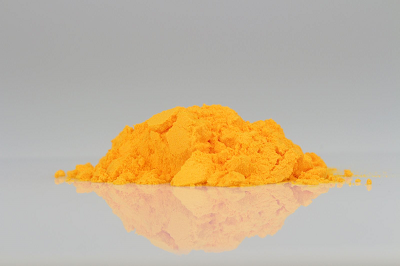
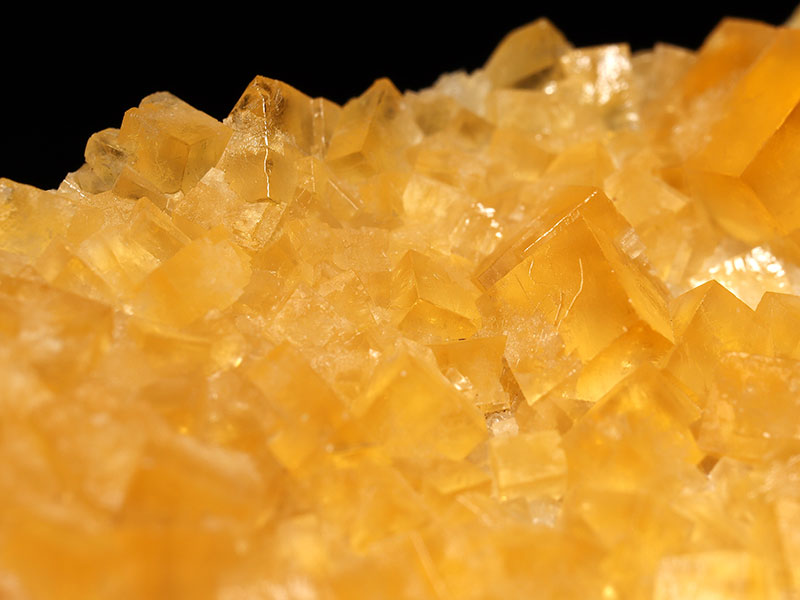
Depicted here are the raw material CoQ10 crystals. The human body cannot absorb the crystals. They must be dissolved to single molecules to permit absorption.
CoQ10 supplement manufacturers purchase CoQ10 raw material that is a crystalline powder. The challenge is to develop a CoQ10 crystal dispersion formulation that will keep the ingested CoQ10 dissolved (in solution, not crystalline) long enough to be absorbed. Body temperature (ca. 37 degrees C) is considerably below the temperature needed to keep CoQ10 molecularly dissolved in the digestive system [Judy 2021 Aug].
The CoQ10 needs to be in a dissolved state in the digestive tract. That way, it can enter mixed micelles in the presence of bile salts. These micelles carry the lipid-soluble CoQ10 through the aqueous content of the small intestine to the intestinal absorption cells. Without an effective crystal dispersion formulation, the absorption of the CoQ10 can be lower by as much as 75% [Mantle & Dybring 2020].
Thus, absorption of oral CoQ10 depends on [Mantle & Dybring 2020; Judy 2021 Aug]:
- the dissolution of CoQ10 crystals to single molecules
- the action of bile salts and the formation of micelles
- the presence of dietary lipids (taking the CoQ10 together with a high-fat meal)
- the incorporation of CoQ10 single molecules into micelles
- the delivery of the CoQ10 in the micelles to the intestinal absorption cells
Formulation of the CoQ10 Supplement All Important
In marketing campaigns, there have been and there are many misleading claims for better absorption of the ubiquinol form of CoQ10 [Judy 2021 Dec].
Note: CoQ10 exists and CoQ10 supplements are available in two redox forms: the oxidized form called ubiquinone and the reduced form called ubiquinol. As part of the normal function of CoQ10, the ubiquinone and ubiquinol forms are continually inter-converted many times per second, so each of these forms is of equal importance. Some marketing material implies that ubiquinol is the more important form of CoQ10, which is incorrect.
Differences in CoQ10 absorption and in plasma CoQ10 levels result much more from differences in the formulation quality than from differences in the redox state (ubiquinone or ubiquinol) of the CoQ10 supplement [Mantle & Dybring 2020; Lopez-Lluch 2019].
- The CoQ10 absorption problem is the solubility or the lack of solubility of the supplement, not the redox state of the supplement.
- Both ubiquinone and ubiquinol are extremely lipophilic and practically insoluble in the watery environment of the small intestines.
- Without a proper crystal dispersion formulation, both CoQ10 forms will crystallize in the gut and will have very low absorption.
- Given a high-quality crystal dispersion formulation and equivalent dosages, the two CoQ10 redox forms can achieve comparable plasma levels.
Note: Reported differences in plasma levels in older studies have resulted from comparisons of newer ubiquinol formulations with older, poorer formulations of ubiquinone, e.g., dry powder formulations or formulations containing many CoQ10 crystals [Judy 2021 Aug; Judy 2021 Dec].
CoQ10 and Prevention of Cardiovascular Disease
In late 2023, Fladerer & Grollitsch evaluated the efficacy of ubiquinone and ubiquinol supplementation to prevent cardiovascular disease in patients with heart failure. They analyzed 28 clinical trials (23 for ubiquinone and 5 for ubiquinol), The main outcomes of their review were the following [Fladerer & Grollitsch 2023]:
- Ubiquinone supplementation reduced cardiovascular death in patients with heart failure. As of late 2023, this outcome had not been reported for ubiquinol.
- The test concentrations that lead to cardiovascular health benefits were lower in ubiquinone studies than in ubiquinol studies.
- Positive long-term effects reducing cardiovascular mortality were reported only in ubiquinol studies.
Accordingly, Fladerer & Grollitsch [2023] recommended ubiquinone supplements rather than ubiquinol supplements to treat and prevent cardiovascular disease in patients with heart failure.
Ubiquinone Used in Q-Symbio and KiSel-10 Clinical Studies
The two most cited clinical trials of CoQ10 and heart health used ubiquinone supplements produced with a patented crystal dispersion process.
Q-SYMBIO study

Depicted here is Dr. Svend Aage Mortensen, the lead researcher on the Q-Symbio study of the effect of adjuvant treatment of heart failure patients with ubiquinone CoQ10 supplements.
Researchers in the Q-Symbio study enrolled 420 heart failure patients and administered 3 × 100 mg of CoQ10 per day in addition to conventional heart failure medication. After 2 years, the researchers found significantly improved symptoms and survival. Cardiovascular mortality, all-cause mortality, and incidence of hospital stays all declined significantly in the CoQ10 adjuvant treatment group compared to placebo group [Mortensen 2014].
KISEL-10 study
In the KiSel-10 study, researchers enrolled 443 community living senior citizens and supplemented their diets with 2 x 100 mg of CoQ10 combined with 200 mcg of selenium per day for four years. The combined supplementation resulted in significantly improved heart function and significantly reduced cardiovascular disease mortality. The supplementation significantly reduced chronic low-grade inflammation, oxidative stress, and fibrosis [Alehagen 2022].
Conclusions: Formulation of CoQ10 Supplements
The formulation and the solubility of the CoQ10 supplement is far more important to the absorption of the CoQ10 than is the form of the supplement, whether ubiquinone or ubiquinol.
This basic fact about the absorption of CoQ10 does not get mentioned in marketing claims for ubiquinol products.
Mantle & Dybring [2020] and Judy [2021 Dec] describe in detail the misleading representations for ubiquinol supplements.
Sources
Alehagen U et al. Improved cardiovascular health by supplementation with selenium and coenzyme Q10: applying structural equation modelling to clinical outcomes and biomarkers to explore underlying mechanisms in a prospective randomized double-blind placebo-controlled intervention project in Sweden. Eur J Nutr. 2022 Sep;61(6):3135-3148.
https://pubmed.ncbi.nlm.nih.gov/35381849/
Fladerer JP, Grollitsch S. Comparison of Coenzyme Q10 (Ubiquinone) and Reduced Coenzyme Q10 (Ubiquinol) as supplement to prevent cardiovascular disease and reduce cardiovascular mortality. Curr Cardiol Rep. 2023 Dec;25(12):1759-1767.
https://pmc.ncbi.nlm.nih.gov/articles/PMC10811087/
Judy WV. The Instability of the lipid-soluble antioxidant ubiquinol: Part 1-lab studies. Integr Med (Encinitas). 2021 Aug;20(4):24-28.
https://pubmed.ncbi.nlm.nih.gov/34602873/
Judy WV. The Instability of the lipid-soluble antioxidant ubiquinol: Part 2-dog studies. Integr Med (Encinitas). 2021 Oct;20(5):26-30.
https://pubmed.ncbi.nlm.nih.gov/34803537/
Judy WV. The Instability of the lipid-soluble antioxidant ubiquinol: Part 3-misleading marketing claims. Integr Med (Encinitas). 2021 Dec;20(6):24-28.
https://pubmed.ncbi.nlm.nih.gov/35250400/
Judy WV. The Single-dose absorption and steady-state bioavailability of different Coenzyme Q10 formulations. Integr Med (Encinitas). 2022 Feb;21(1):28-34.
https://pubmed.ncbi.nlm.nih.gov/35431689/
López-Lluch G et al. Bioavailability of coenzyme Q10 supplements depends on carrier lipids and solubilization. Nutrition. 2019 Jan;57:133-140.
https://pubmed.ncbi.nlm.nih.gov/30153575/
Mantle D, Dybring A. Bioavailability of Coenzyme Q10: An overview of the absorption process and subsequent metabolism. Antioxidants (Basel). 2020 May 5;9(5):386.
https://pubmed.ncbi.nlm.nih.gov/32380795/
Mortensen SA et al. The effect of coenzyme Q10 on morbidity and mortality in chronic heart failure: results from Q-SYMBIO: a randomized double-blind trial. JACC Heart Fail. 2014 Dec;2(6):641-9.
https://pubmed.ncbi.nlm.nih.gov/25282031/
The information presented in this review article is not intended as medical advice. It should not be used as such.

Leave A Comment